
What Is a Caping Knife Used For?

Customers often ask us what a caping knife is and how it differs from other small hunting blades. At its core, a caping knife is a compact, finely designed tool used for the delicate detail work around the head, neck, and hooves of a game animal—especially when the hide will be saved for mounting.
Think of it like peeling an apple while keeping the peel in one piece. When the goal is preserving the hide, precision matters.
For general processing where the focus is on meat yield rather than taxidermy, a three-finger skinner or other traditional skinning knives will handle the job just fine. But when detail counts, a caping knife really shines.
While the caping knife is purpose-built for field dressing, its compact size makes it surprisingly versatile. Many customers carry it for everyday tasks—opening packages, gardening, small shop work—because the control and size are just plain handy.
Caping Knife vs. Skinning Knife: What’s the Difference?
Our caping knife features a tapered drop-point blade that allows for controlled, intentional cuts without accidentally puncturing the hide. This is where it differs from clip-point blades or more general-purpose skinners, which can slip or dig in unintentionally during delicate trimming.
Where a skinner is built for separating hide from muscle over large surface areas, the caper is built for precision—working around curves, tight areas, and fine edges.
The Benefits of a Full Flat Grind
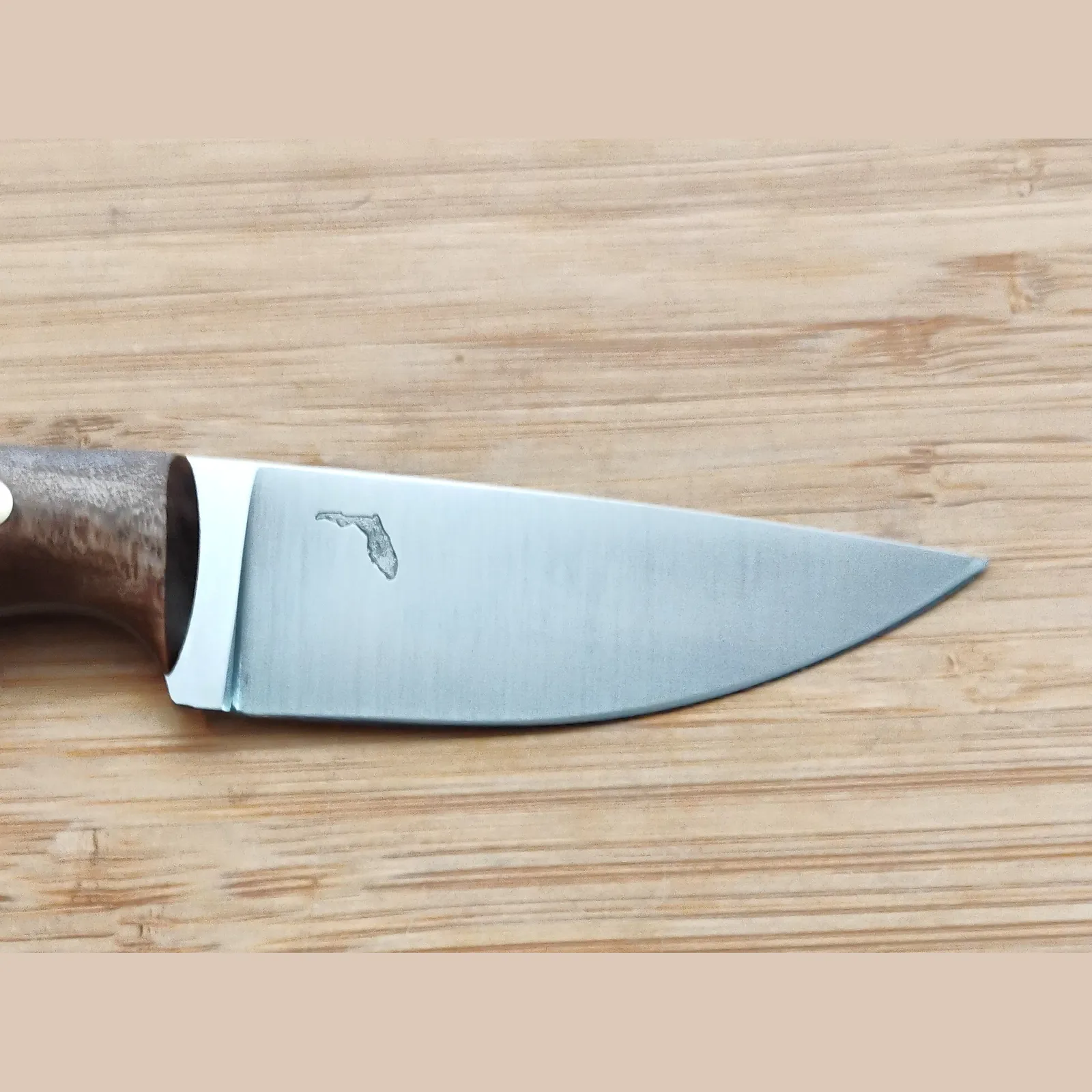
Greg uses a full flat grind on our caping knives because it makes it easier to trim the hide and gently pull it away as you work.
A saber grind leaves a thicker “cheek” near the spine, turning the blade into more of a wedge and increasing the risk of cutting through the hide. The flat grind slices cleanly and predictably—exactly what you want when working careful lines.
Handle Design: Grip, Comfort, and Florida Style
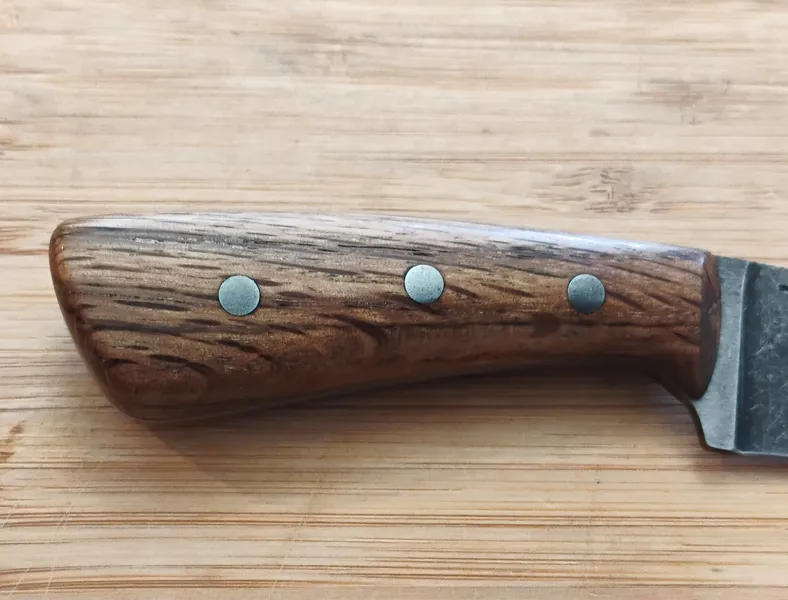
Our Florida Series caping knives feature stabilized Florida hardwoods, giving each knife its own natural character and beauty.
The handle itself is shaped in a subtle teardrop profile, which offers excellent grip and control whether your hands are dry, wet, or covered in field debris. The full tang adds weight in the hand. The teardrop shape helps prevent the knife from shifting or slipping during fine work.
Why We Use 1/8” 1095 Steel in Our Caping Knives
We forge our caping knives from 1/8-inch 1095 high-carbon steel—a thickness that hits the balance between strength and precision.
- Too thin, and the blade risks flexing during delicate cuts, potentially slipping where it shouldn’t.
- Too thick, and you lose the fine control needed to preserve the hide.
The distal taper brings the tip down to a fine point without sacrificing backbone, making the knife strong enough for tougher cuts yet delicate enough for detail work.
We prefer 1095 because of its exceptional toughness and edge-holding capability. When heat-treated and tempered properly, it avoids chipping while maintaining an edge that few steels can match. It also responds predictably during the making process—consistent, repeatable, and reliable.
Can a Caping Knife Be Used for Full Skinning?
Yes—you could. A caping knife can do the whole job…but it wouldn’t be your first choice for the larger, broad areas. It excels in the detail work and is intended as a companion blade, not the sole skinning tool.
Care and Cleaning: Avoiding a “Pookie” Sheath
Once the job is done, clean your knife with a mild solution and a damp cloth. Dry it thoroughly and apply a light coat of wax or oil. Most seasoned hunters carry wipes or a small cleaning kit, so a quick wipe-down in the field isn’t unusual.
If you skip this step, the leather sheath will absorb the moisture and grime, making it… well… pookie. It will also accelerate rusting and create an unpleasant smell.
Looking for a Reliable, Handmade Caping Knife?
Every GreBec caping knife is crafted by hand from 1/8” 1095 steel with stabilized Florida hardwood handles . Whether you’re preparing a mount or trimming delicate areas in the field, this knife is built for control, comfort, and long-lasting performance.
See our latest caping knives here → Caping Knives
Looking for a skinner instead? Check out our Three-Finger Skinners
What’s a Florida Series knife from GreBec Knives? → About our Florida Series
See all GreBec handmade knives → Our Store